Esther's Electroconvulsive Treatment Under Doctor Nolan
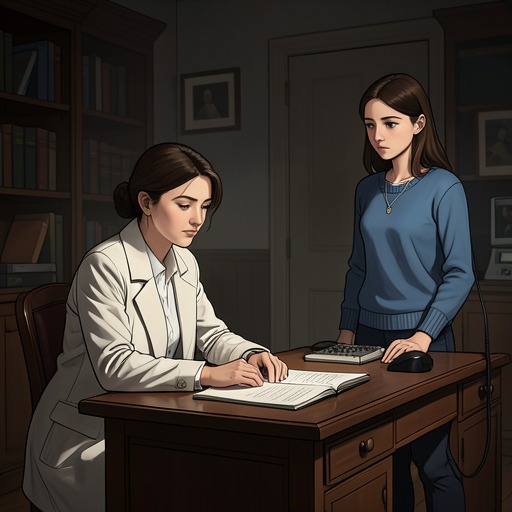
The Bell JarEsther’s electroconvulsive treatment under Doctor Nolan is a turning point in how the novel portrays psychiatric care: after a traumatic first treatment under Doctor Gordon, the procedure remains frightening, but Nolan’s presence and promise to stay with Esther alter its immediate experience. The episode does not make treatment effortless or erase Esther’s fear. Instead, it ties her willingness to proceed to a specific promise of accompaniment, then closes with the revelation that the treatments will recur three times each week.
Background: the first treatment
Earlier, Doctor Gordon had brought Esther into a bare room with barred windows and locks on the doors, drawers, and closet. After she lay on the bed, a nurse took her watch and removed her hairpins. Gordon fixed metal plates to either side of Esther’s head, strapped them in place, and gave her a wire to bite. Esther experienced the treatment as a violent shaking accompanied by a shrill sound and flashes of blue light; afterward, her watch was back on her wrist upside down, and her hairpins felt unfamiliar. The concrete disorientation of those details distinguishes this first encounter from the later one under Nolan, even though both involve electroconvulsive treatment.
Esther subsequently described the machine, flashes, jolting, and noise to Nolan. Nolan went still and told her the treatment should not have happened that way. Her response gives Esther a basis for trusting Nolan, but it also raises the stakes when Esther later believes that Nolan has failed to warn her about another treatment.
Betrayal and the promise
At Belsize, Esther learns that she is to receive her tray later and leaves before the nurse finishes speaking. Rather than go to her room, where she expects attendants to come for her, she retreats to an alcove in a quiet corner of the hall. There she curls beneath a blanket. The immediate injury, as Esther understands it, is not simply the prospect of another shock: she feels betrayed because Nolan had promised to warn her beforehand, and Esther had trusted her with everything.
Esther imagines that advance notice would have given her a chance to endure the night in dread, compose herself by morning, and walk past the other patients with dignity. In the alcove, however, she anticipates being dragged out by attendants and carried, struggling, past an audience in the lounge. Nolan interrupts that imagined scene by putting an arm around Esther and hugging her like a mother. Esther shouts that Nolan promised to tell her. Nolan answers that she has come specially early to do so and will take Esther over herself.
Nolan explains that she had thought advance warning would keep Esther awake; Esther insists again that Nolan had promised. The exchange makes their disagreement specific: Nolan’s intention to spare Esther a night of fear has had the opposite effect, because the lack of warning feels like a breach of trust. Nolan then promises to go with Esther, remain throughout the procedure, be there when she wakes, and bring her back. Esther asks for a promise, and Nolan gives one. After wiping Esther’s face with a white handkerchief, Nolan hooks her arm through Esther’s and helps her up. Esther drops the blanket that has tangled around her feet, and they set off together.
The route to electrotherapy
The journey carries Esther and Nolan through a door at the end of the hospital hall and down into the basement passages connecting the buildings. The tunnels make the hospital’s institutional structure tangible: bright white tile, bare bulbs, pipes running along the walls, and stretchers and wheelchairs set aside against them. Esther clings to Nolan’s arm; Nolan answers with an encouraging squeeze from time to time. Her physical contact is not a substitute for the procedure, but it makes the promised companionship present along the route.
At a green door marked Electrotherapy, Esther holds back. Nolan waits rather than pulling her forward. Esther then decides to get it over with, and they enter. In the treatment room she sees, through narrowed eyes, a high bed covered with a taut white sheet, the machine behind it, and masked people around the bed. Miss Huey helps her lie down while Nolan remains with her. Esther asks Miss Huey to talk to her. The nurse speaks soothingly, applies salve to Esther’s temples, and fits small electric buttons to either side of her head. Esther bites down in panic and loses consciousness.
Waking and the continuing course
Esther wakes from a deep, drenched sleep to Nolan’s face close before her, calling her name. She glimpses a woman in a checked robe lying on a cot, but Nolan leads her through a door before she can take in more. Outside, under a blue sky and amid the crunch of brown leaves, Esther feels the heat and fear leave her. She describes herself as surprisingly at peace, with the bell jar suspended above her and air circulating around her. The image registers a temporary release from suffocation, not a declaration that the crisis is over.
Walking back to Belsize, Esther agrees that the treatment was as Nolan had said it would be. Nolan then states firmly that future treatments will be like this one and specifies the schedule: three times a week, on Tuesday, Thursday, and Saturday. Esther draws a long breath and asks how long the course will last. The episode therefore ends not with a completed cure or a stated duration, but with a schedule and an unanswered question about its endpoint.
Significance
The contrast between the two treatments is grounded in Esther’s reported experience. Under Doctor Gordon, the metal plates, strap, wire, blue flashes, jolting, and disordered return of her watch and hairpins make the procedure feel terrifying and bewildering. Under Nolan, Esther still panics at the sight of the room and bites down in fear, but Nolan accompanies her through the tunnels, waits when she hesitates, and is present when she wakes. The difference is not that fear disappears; it is that the care surrounding the procedure changes what Esther can endure and how she experiences its aftermath.
Trust is central to that change, and the episode does not present Nolan as beyond reproach. Esther’s retreat into the alcove follows what she experiences as Nolan’s failure to keep her informed. Nolan’s explanation does not erase the hurt; her decision to come early, accompany Esther herself, and remain through the treatment gives her promise practical form. The scene thus locates reassurance in specific acts—waiting, walking beside Esther, answering her demand for a promise, and meeting her on waking—while leaving the broader course of treatment ongoing.